
Preparing Yourself to Exit Your IT Business: Are You Ready to Be Needed Less?
When IT business owners start thinking about a potential future exit, much of the focus naturally falls on the business.
- Is revenue predictable?
- Is the management team strong enough?
- Are processes documented?
- Is there too much customer concentration?
- Can sales happen without the owner?
- And, perhaps most importantly, can the business operate successfully without you?
These are all important questions. Whether you own a managed service provider (MSP), software company, cybersecurity business, IT consultancy or technology integrator, reducing owner dependency can be an important part of preparing your business for a potential future exit.
But there's another question that receives far less attention:
Are you personally ready for your business to need you less?
For many IT business owners, the company has been a huge part of their life for years, sometimes decades. You've built customer relationships, solved problems, made the difficult decisions, developed your team and probably spent more hours thinking about the business than you would care to count.
Being needed can become part of the job. It can also become part of your identity.
That's why preparing for a future exit isn't only about changing the business. At some point, it may also require changing your relationship with it.
I experienced this myself when preparing for and eventually exiting the IT business I had co-founded. We spent around two years getting the business into a position where it was increasingly able to operate without us. That preparation ultimately helped make the transition after the sale relatively quick.
But there were aspects of becoming less central to the business that no spreadsheet, process document or exit plan could fully prepare me for.
And looking back, I think that's an important part of exit readiness that business owners should start thinking about much earlier.
Preparing Your IT Business for Exit Is Only Half the Story
When preparing a business for a potential future exit, it’s easy to concentrate on the things a future buyer might look at:
- Financial performance
- Recurring revenue
- Customer concentration
- The strength of the management team
- Documented processes
- How dependent the business is on its owners
But there are really two things being prepared at the same time: the business for a potential change of ownership, and you for a potential change in your role.
Those two things are closely connected.
If your managed service provider, software company, cybersecurity business or IT consultancy still depends on you to make the important decisions, maintain key customer relationships, solve difficult problems or drive sales, reducing that dependency can make the business stronger.
But every responsibility you successfully transfer also changes your own role.
Decisions you once made may increasingly be made by somebody else. Customer relationships you have developed over many years may need to be shared or handed over. Members of your team may begin solving problems without involving you. Eventually, you may find that the business can have a perfectly good day without needing you at all.
From a business perspective, that can be a sign of progress.
From an owner's perspective, it can feel surprisingly strange.
That’s why I think personal readiness deserves a place alongside all the more tangible areas of exit readiness. You can strengthen the numbers, systems, processes and team, but you also need to start thinking about what your own role might become as the business grows less dependent on you.
And that can raise a much more personal question:
If being the owner has been a significant part of your identity for many years, what happens when the business no longer needs you in quite the same way?
When Your Business Becomes Part of Your Identity
If you’ve spent years building a business, it can become difficult to separate what you do from who you are.
That was certainly true for me.
I co-founded our IT business in 2004, and by the time we eventually sold it, the business had been part of my life for around 15 years. During that time, I had watched it grow, built long-standing customer relationships, worked alongside the team and experienced plenty of highs and lows along the way.
Being one of the owners had become part of my identity.
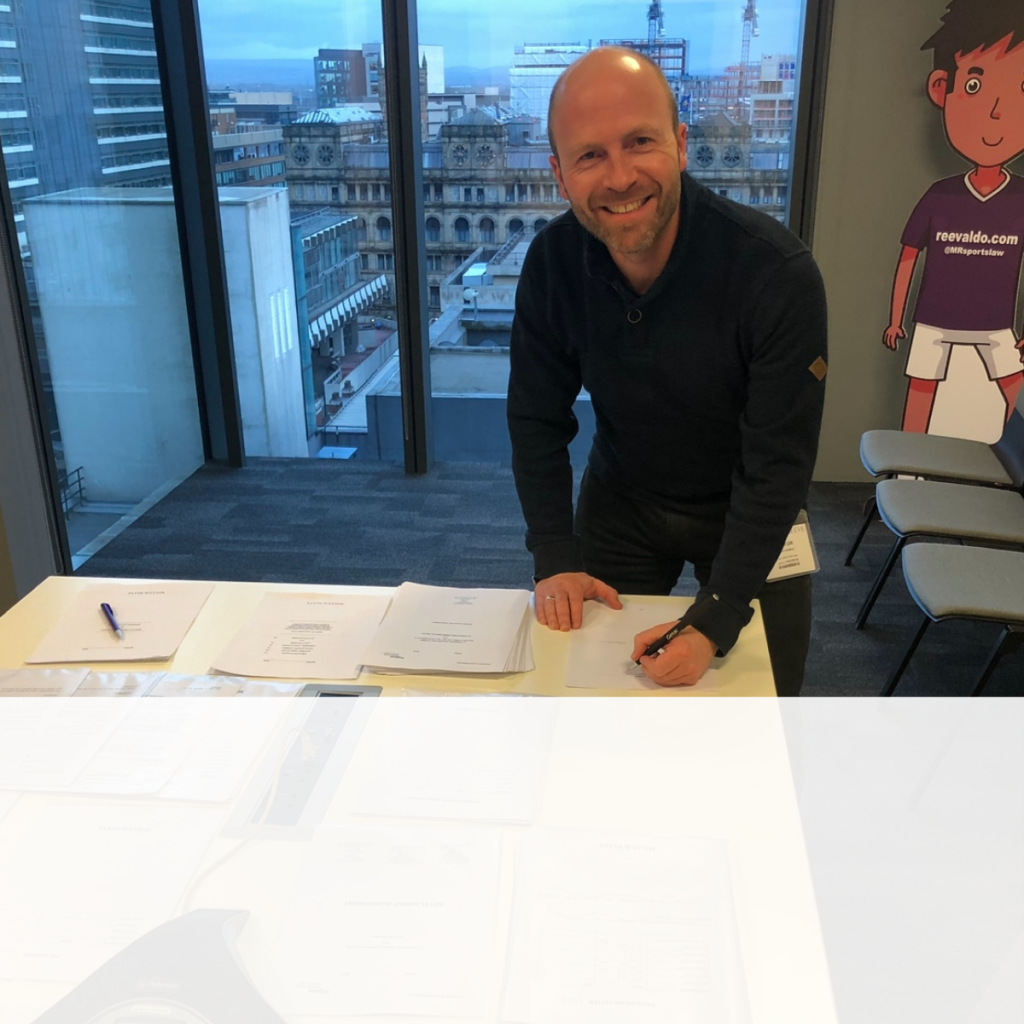
Signing the documents for the sale of our IT business in 2019, after 15 years of building the company.
I think this can be particularly true in owner-led technology businesses. If you’ve built a managed service provider (MSP), cybersecurity company, software business, IT consultancy or technology reseller from the ground up, you’ve probably been involved in almost every aspect of it at some point.
Over time, however, preparing the business to become less dependent on its owners requires you to start letting go of some of that involvement.
For me, one of the unexpected challenges was changing how I measured my own contribution.
For many years, a significant part of how I judged my success was by the revenue I personally brought into the business. But as we moved closer to a sale, my role began to change. I was handing over responsibilities and customer relationships while spending more of my time on due diligence, meeting potential buyers and everything else involved in preparing for the transaction.
For a while, that caught me out.
By my old measure of success, I could have looked at myself and thought I was contributing less. In reality, what the business needed from me had changed.
My value was no longer simply about how much revenue I could personally generate. Part of my job was now to help create a business that could continue successfully without relying on me — or either of my fellow co-founders — to do so.
Looking back, I think that change in mindset was an important part of preparing myself for the eventual exit.
Because if your measure of success has always been based on how much the business needs you, becoming successfully less needed can feel remarkably like you're going in the wrong direction.
Are You Really Ready for Your IT Business to Need You Less?
There’s an interesting contradiction at the heart of owner dependency.
Many business owners spend years saying they want the business to rely on them less. They want their team to make more decisions, customers to have strong relationships with other people in the business, and problems to be solved without everything landing back on their desk.
But when that starts to happen, it can feel surprisingly unfamiliar.
You might find yourself no longer invited into conversations you would once automatically have been part of. Someone else might make a decision differently from the way you would have made it. A customer who has always called you first might start calling their account manager instead.
The temptation can be to step back in.
But if you’re serious about reducing owner dependency, there comes a point where you have to give people genuine responsibility rather than simply delegating tasks while continuing to make all the important decisions yourself.
That doesn’t mean disappearing from the business overnight. It means gradually creating the space for other people to step up, make decisions, develop relationships and occasionally make mistakes.
In my own case, the change became even more noticeable after we sold the business.
For the first time in many years, I effectively had a boss. Higher-level decisions that I would previously have been involved in making as an owner now ultimately sat with the new owners of the business.
I also found myself sitting in meetings with customers I had worked with for many years — in some cases, nearly 15 years — introducing them to the new owners and account directors who would increasingly take responsibility for those relationships.
We had prepared carefully for that transition, and fortunately we had a good relationship with the people who acquired the business. But however well you prepare, there are some things you can only fully understand when you experience them.
Going from being one of the people the business depends upon to someone who is deliberately becoming less central is one of them.
And that’s why reducing owner dependency isn’t simply an operational exercise.
The business has to learn to operate without you. But you also have to learn to let it.
Moving From Indispensable to Less Central
For many owners, being indispensable can feel like a sign that they are doing a good job.
Customers ask for you personally. Your team comes to you when something difficult happens. You know the history behind important decisions. And when there is a problem, you are often the person who knows how to fix it.
That can be reassuring. But if you are preparing your IT business for a potential future exit, being indispensable can eventually become a weakness rather than a strength.
The goal isn’t to make yourself irrelevant. It’s to change where you add value.
That might mean spending less time solving individual customer problems and more time developing the people who can solve them. It might mean allowing a account/sales director to own an important relationship, rather than simply involving them while you remain the customer’s main point of contact. Or it could mean giving your management team the authority to make decisions without checking everything with you first.
This is particularly important in owner-led businesses such as managed service providers, IT consultancies, software companies and technical infrastructure businesses, where the founder may have accumulated years of technical knowledge, commercial experience and customer relationships.
Simply documenting a process or changing somebody’s job title doesn’t transfer all of that overnight.
You need to give people opportunities to take responsibility while you are still there to support them. That also means accepting that they may sometimes approach things differently from you.
And that can be difficult.
As owners, we can easily convince ourselves that stepping back is risky because nobody knows the customer like I do, nobody understands this part of the business as well as I do, or it will be quicker if I just do it myself.
Sometimes those things may even be true.
But if they remain true indefinitely, the business remains dependent on you.
Becoming less central is therefore a gradual process. You transfer responsibility, allow people to grow into it, observe what happens and step back in only when genuinely necessary.
Over time, something interesting can happen.
Instead of judging your contribution by how many decisions require your involvement, you can begin judging it by how many good decisions are being made without your involvement.
For an owner preparing for a potential future exit, that can be a very different definition of success.
What Would You Do If Your Business No Longer Needed You?
Reducing owner dependency raises a practical question about the business. But it can also raise a much bigger question about you.
If your business no longer needed you every day, what would you actually do with your time?
For someone who has spent years building a business, that isn’t always an easy question to answer.
Running an IT business can consume an enormous amount of mental space. There are customers to think about, people to manage, problems to solve, opportunities to pursue and decisions to make. Even when you’re not physically at work, the business can still be running somewhere in the back of your mind.
A future exit potentially removes much of that almost overnight.
That’s why I think it’s useful to start thinking about what you might be moving towards, rather than simply what you might eventually be leaving behind.
That doesn’t mean you need to have your entire post-exit life mapped out years in advance. Your plans may change considerably between starting to prepare your business and eventually deciding whether to sell it.
But it’s worth asking yourself some questions:
- What would you like more time for?
- Would you want to start another business, invest in other companies, become involved in something completely different, travel, spend more time with family or simply have greater control over your time?
- Which parts of running the business would you genuinely miss?
- Which parts would you be quite happy never to deal with again?
There’s also another possibility that I think is easily overlooked.
You might discover that once your business is less dependent on you, you don’t actually want to sell it.
If your management team is stronger, customers no longer rely primarily on you, processes work without your constant involvement and the business can operate successfully while giving you greater freedom, continuing to own it may suddenly feel very different.
And that’s perfectly valid.
Preparing for a potential future exit isn’t about convincing yourself that you should sell. It’s about putting yourself and the business in a position where you have more choices.
You may eventually decide to sell. You may step back while retaining ownership. Or you may decide that you’re enjoying the business far more now that it doesn’t consume quite so much of you.
The important thing is that the choice increasingly becomes yours.
Preparing for an Exit Doesn’t Mean Deciding to Sell
One of the reasons I use the phrase potential future exit is because I think the distinction matters.
Starting to prepare your business for an exit doesn’t mean committing yourself to selling it.
If anything, starting early gives you more time to make improvements without the pressure of an impending transaction. It allows you to strengthen the business because those improvements make sense today, while also making it better prepared should you decide to sell in the future.
For an owner of a managed service provider (MSP), cybersecurity business, software company, IT consultancy or technology integrator, many of the things that can improve exit readiness are simply good business practices anyway.
Reducing owner dependency, developing a stronger management team, improving financial visibility, creating more predictable revenue, strengthening processes and spreading key customer relationships across the business can all make the company stronger regardless of whether a sale ever takes place.
The same principle applies to your own readiness.
Thinking about what you want from the future doesn’t mean setting an exit date. Nor does gradually becoming less involved in the day-to-day mean you are preparing to walk away.
It simply creates options.
In fact, as we explored in the previous section, you may eventually build a business that gives you exactly the freedom you were hoping an exit would provide. You might decide to remain an owner while working fewer hours, move into a more strategic role, or continue owning the business while a management team takes greater responsibility for running it.
Alternatively, you might reach the point where selling feels like the right next step.
There is no single correct outcome.
For me, that is one of the most important reasons to begin thinking about exit readiness well before you intend to sell.
The purpose of preparing early isn’t to make the decision for you. It’s to put you in a stronger position when the time comes to make it.
Start Preparing Yourself as Well as Your Business
Exit readiness is often discussed in terms of numbers, systems, processes, customers and management teams. All of those things matter.
But there is a person at the centre of the process too.
If you have spent years building an IT business, preparing for a potential future exit may require you to gradually change your role, your definition of success and eventually your relationship with the business itself.
You don’t need to have all the answers today.
A useful starting point is simply to step back from the day-to-day demands of your business and ask yourself some honest questions.
- What do I want the next few years to look like?
- How dependent is the business on me today?
- Which responsibilities or relationships could I begin transferring to other people?
- What would I find hardest to let go of?
- If the business genuinely could operate without me, what would I want to do with that freedom?
These were some of the questions I had to work through during my own journey.
We prepared our business thoroughly in the two years leading up to its sale, and that preparation undoubtedly helped. But I also learned that there are aspects of no longer being the owner that you cannot completely understand in advance.
You can, however, start thinking about them.
That is one of the reasons my Exit Readiness Focus Framework begins with PAUSE and CLARIFY, before moving on to priorities and action. Before deciding what needs to change in the business, it is worth taking some time to understand what you actually want from the future.
Because preparing for a potential exit shouldn’t only be about creating a business that somebody might eventually want to buy.
It should also be about creating a business — and a future — that gives you more choice.
If you’re beginning to think about a potential future exit from your managed service provider, software company, cybersecurity business, IT consultancy or technology integration business, you can download my Exit Readiness Focus Framework completely free.
It will help you assess where your business is today, think about where you want to go and identify what deserves your attention first.
DOWNLOAD THE EXIT READINESS FOCUS FRAMEWORK WORKBOOK
No email address. No sign-up. Just a practical place to start.
Build a stronger business now. Give yourself more choice later.