
Do You Really Know Your Numbers? Why It Matters When Selling Your IT Business
When we were preparing our information technology (IT) business for a potential sale, one thing I was particularly grateful for was having a reasonable understanding of our financial performance.
Finance wasn't my main responsibility. My background was primarily in sales, and I was also involved in operations. We had an excellent accountant and financial controller who supported us throughout the sale process.
But being able to understand our financial reports, follow the terminology and participate in conversations about the business's performance gave me a level of confidence that I really valued. And that became increasingly important as discussions progressed with potential buyers and, ultimately, the company that acquired us.
I didn't need to become an accountant. But I was certainly glad I'd taken the time to understand our numbers.
Understanding Your Numbers Starts Long Before a Sale
One thing I learned from building and eventually selling our IT business was that understanding financial performance shouldn't begin when you decide to sell. It should be part of running the business.
Whether you run a managed service provider (MSP), software company, cybersecurity business, IT consultancy or hardware and infrastructure provider, you probably have plenty of responsibilities competing for your attention. You might be leading sales, managing customer relationships, overseeing operations or dealing with the day-to-day challenges of running your business.
And if you have a finance department, financial controller or accountant, it's perfectly reasonable to rely on their expertise. But there's a difference between having someone prepare your financial reports and understanding what those reports are telling you.
For me, having that working knowledge meant I could participate in discussions about our performance, ask better questions and understand the implications of the figures being presented. It also gave me greater confidence when making decisions about the direction of the business.
You Don't Need to Know Everything
Financial reporting can seem complicated, particularly if finance isn't your background. There's plenty of terminology, different reports and accounting principles that can take time to understand.
But I don't believe business owners need to become financial experts. What matters is developing a reasonable understanding of the key reports and what they tell you about your business.
For example:
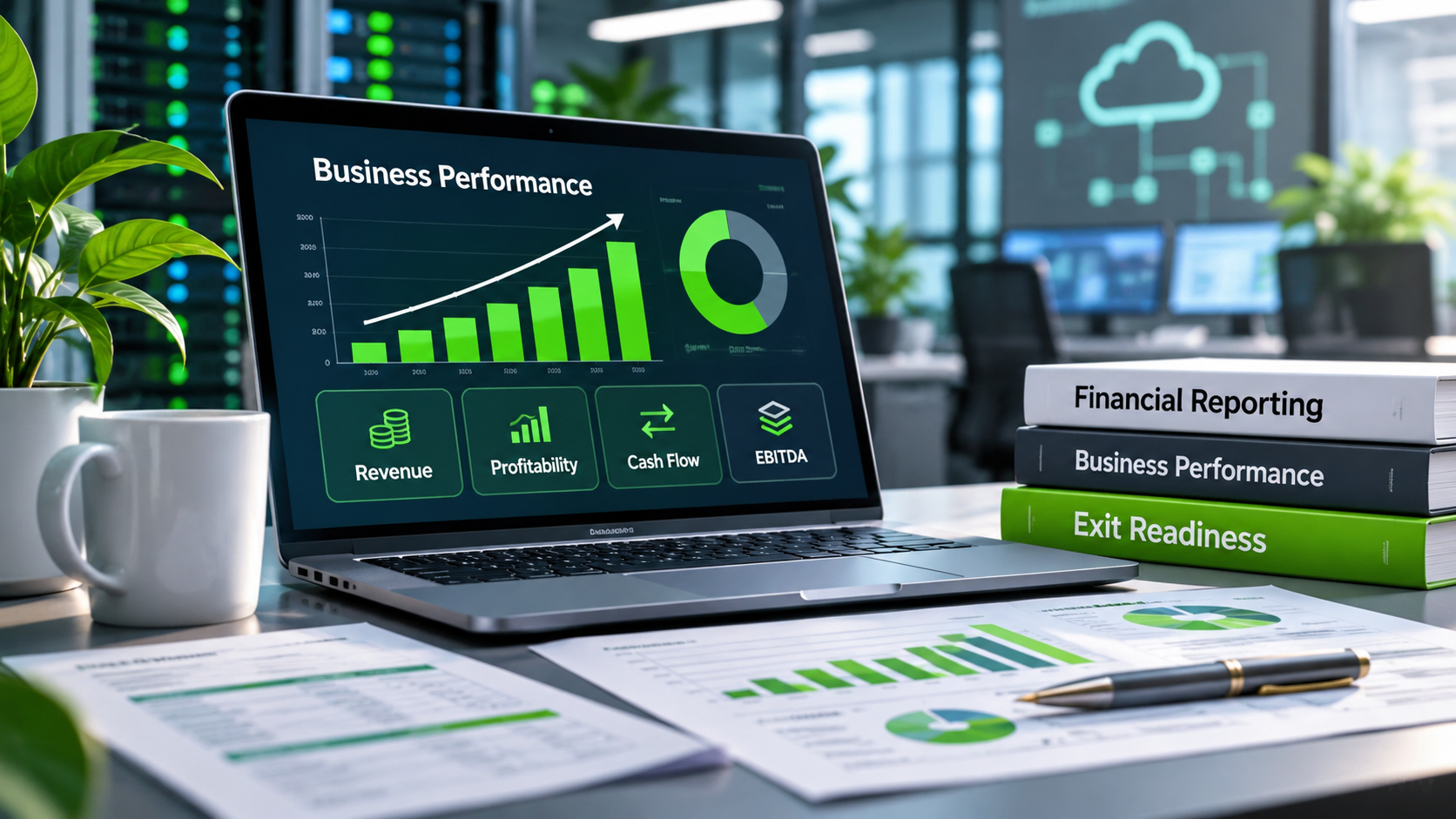
Your profit and loss account (P&L) helps you understand revenue, costs and profitability. Are sales increasing? Are margins improving? Which parts of the business are contributing most to profit?
Your balance sheet provides a picture of the business's financial position, including what it owns, what it is owed and what it owes to others.
Your cash flow forecast helps you anticipate when money will come into and leave the business. As many owners discover, making a profit doesn't necessarily mean you have enough cash available when you need it.
And then there's EBITDA, a term you're likely to encounter when discussing a potential business sale. It stands for Earnings Before Interest, Tax, Depreciation and Amortisation and is one measure buyers may use when assessing a company's earnings and potential value.
You don't necessarily need to prepare or calculate all these figures yourself. That's where your accountant or finance team can help.
But understanding what they mean, how they relate to one another and what they reveal about your business is incredibly useful.
When Buyers Start Asking Questions
This is where my own understanding of financial reporting became particularly valuable.
When we entered discussions with potential buyers, the conversations naturally became more detailed. It wasn't simply a question of how much turnover we generated or whether the business was profitable.
There was a much greater interest in understanding how the business performed, where revenue came from, what influenced profitability and how sustainable that performance might be.
For an IT business, that might mean examining recurring revenue from managed services or software subscriptions, profitability across consultancy and project work, margins on hardware sales, customer contracts and the contribution of individual customers.
During the acquisition process, our accountant was involved in financial discussions and supported us through due diligence. That professional expertise was essential.
But having my own understanding meant I wasn't simply sitting in meetings listening to financial terminology that I didn't understand. I could follow the conversations, contribute where appropriate and ask questions when something needed clarification.
I found that reassuring, particularly when the discussions involved a business we'd spent years building.
And while every acquisition is different, I believe that confidence is something many owners would benefit from developing before they find themselves in a similar situation.
Good Financial Reporting Helps You Run a Better Business
Of course, preparing for a future exit isn't the only reason to understand your numbers. Good financial reporting helps you make better decisions today.
For example, an IT business might be increasing its turnover while its profit margins are declining.
A large customer might generate significant revenue but require so much additional support that their contribution to profit is lower than expected.
Or a profitable project might create cash flow pressure because suppliers need paying long before the customer settles their invoice.
These are the sorts of things that become easier to recognise when you regularly review your financial performance and understand what's driving the results.
And you don't have to do that alone. A good accountant or financial controller should be able to help you interpret the information, understand changes and identify areas that might need attention.
The important thing is to engage with the numbers rather than simply receive the reports.
Start Before You're Ready to Sell
If you're an IT business owner considering a potential future exit, my advice would be to start developing your financial understanding now.
Not because you necessarily intend to sell anytime soon. But because understanding how your business performs is an important part of building a stronger, more sustainable business.
Start with your latest management accounts. Sit down with your accountant or finance lead and ask them to explain anything you're unsure about.
Look beyond the headline turnover and profit figures. Try to understand what's driving the results, where the risks might be and what could be improved.
If you're unsure where to begin, my free EXIT READINESS FOCUS FRAMEWORK can help you assess your business across nine important areas, including financial reporting, and identify where improvements might be useful.
You don't need to tackle everything at once.
And when the time eventually comes to explore a potential sale, you'll hopefully find yourself in a much stronger position to participate in those conversations with confidence.
That's certainly something I valued during my own experience.
You don't need to become a financial expert. But as a business owner, understanding your numbers is time well spent.